Bourbon & Whiskey on the Marietta Square
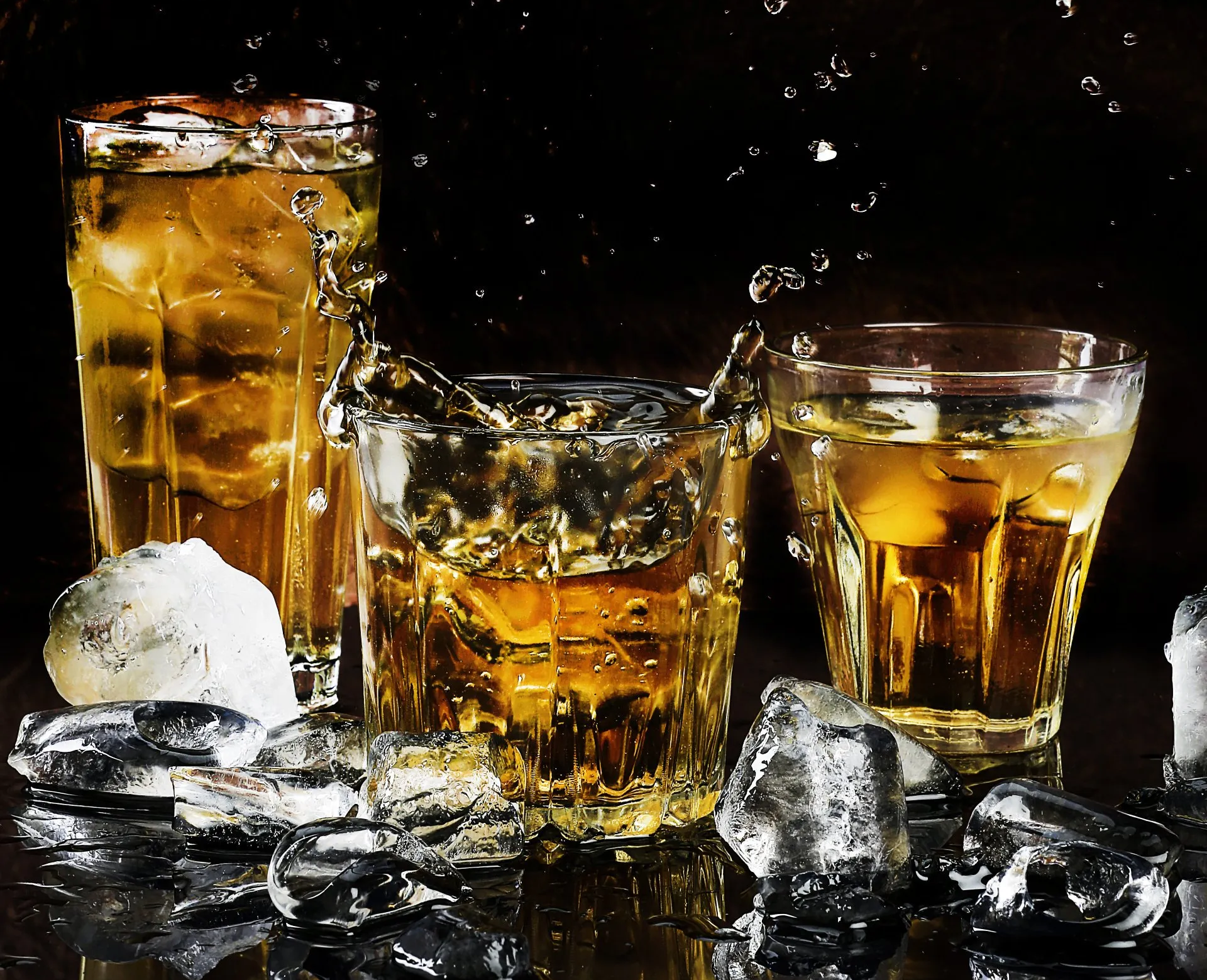
There is something about bourbon that feels right in a classic American steakhouse.
Maybe it is the deep amber color catching the light behind the bar. Maybe it is that first aroma of oak, vanilla and caramel when a glass is poured. Or maybe it is simply the ritual of settling into a comfortable seat, ordering a great steak and deciding whether tonight calls for bourbon neat, over ice or mixed into a favorite cocktail.
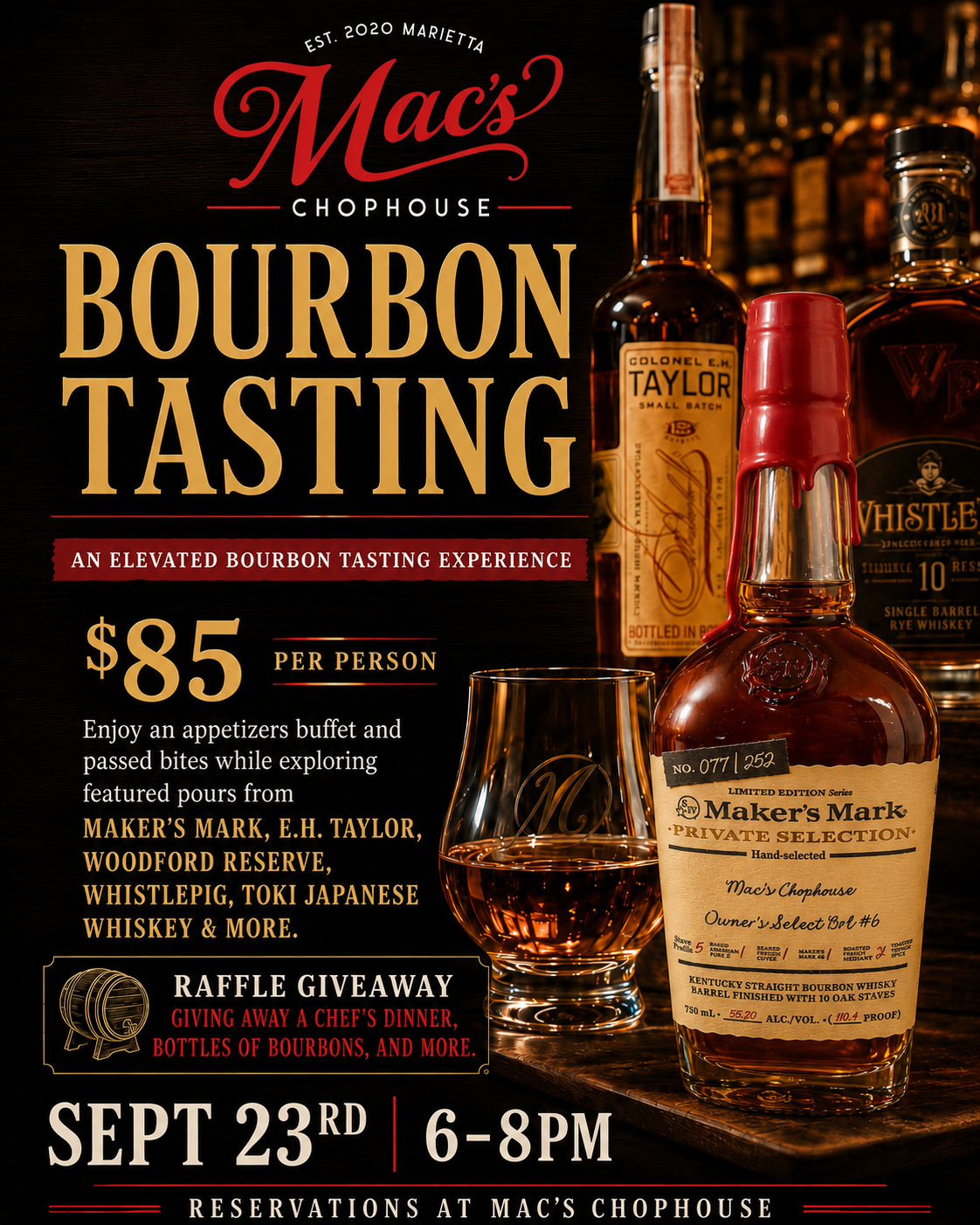
At Mac’s Chophouse on historic Marietta Square, bourbon is a natural part of the experience.
Our bar program includes an extensive selection of bourbon and whiskey alongside craft cocktails, wines and other premium spirits. For longtime bourbon drinkers, there are always familiar favorites worth revisiting. For someone who has never really explored bourbon, the bar at Mac’s can also be a pretty good place to start.
But what actually makes bourbon different from all the other bottles labeled whiskey?
Pour yourself a glass and let’s start there.
All Bourbon Is Whiskey, But Not All Whiskey Is Bourbon
This is probably the easiest way to understand bourbon.
Whiskey is the larger family of spirits. Bourbon is one particular type of whiskey with very specific rules about how it is produced.
One of the biggest differences is the grain.
To legally qualify as bourbon, the fermented grain mixture, commonly called the mash bill, must contain at least 51 percent corn. The remaining portion can include grains such as rye, wheat and malted barley.
That corn plays a big role in the flavor people associate with bourbon. Compared with many other whiskies, bourbon often has a slightly sweeter character with flavors that can include caramel, vanilla, brown sugar, toasted oak and baking spices.
But the other grains matter too.
A bourbon with more rye in the mash bill can taste spicier and a little bolder. Wheat can give bourbon a softer, rounder character. Change the recipe, the barrel, the aging conditions or the length of maturation and you can end up with a dramatically different glass.
That is part of what makes tasting different bourbons so interesting.
Bourbon Is Truly an American Spirit
Scotch has Scotland. Irish whiskey has Ireland.
Bourbon has the United States.
Under federal standards, bourbon must be produced in the United States. Congress formally recognized bourbon whiskey as a distinctive product of the United States in 1964.
Kentucky is unquestionably the state most closely associated with bourbon, but bourbon does not have to come from Kentucky.
Distilleries can produce bourbon in Georgia, Tennessee, Texas, New York or anywhere else in the United States as long as they follow the legal requirements for making it.
That makes bourbon more than simply a Kentucky tradition. It is part of a much broader American whiskey tradition.
And there may be no more appropriate setting for enjoying an American spirit than a classic steakhouse overlooking historic Marietta Square.
The Barrel Changes Everything
Corn may give bourbon part of its character, but much of the magic happens after distillation.
Bourbon must be stored in new charred oak containers. Once a barrel has been used to age bourbon, it cannot simply be filled again with another batch and still satisfy bourbon's new oak requirement.
Why char the wood?
Because whiskey and oak have a remarkable relationship.
As bourbon rests inside the barrel, the spirit interacts with the wood. Changes in temperature cause the whiskey to move in and out of the oak, pulling compounds from the barrel over time.
That interaction helps produce the flavors and aromas bourbon drinkers recognize.
- Vanilla.
- Caramel.
- Toasted sugar.
- Oak.
- Warm spice.
Sometimes smoke, nuts, fruit or even hints of leather and tobacco.
The barrel also contributes significantly to bourbon's rich amber color.
This is one reason two bourbons made with similar mash bills can still taste completely different. Where they were aged, the characteristics of the barrel, the climate and the amount of time spent maturing can all influence what eventually reaches your glass.
Does Bourbon Have to Be Aged for Years?
Here is one of the more surprising bourbon facts.
There is no general minimum aging period required simply for a whiskey to be called bourbon.
That is different from what many people assume.
However, a bourbon labeled straight bourbon whiskey must spend at least two years in new charred oak. Federal standards also impose additional labeling requirements related to age.
Of course, just because bourbon can technically qualify without spending many years in a barrel does not mean time is unimportant.
Aging allows the whiskey and wood to interact. But older does not automatically mean better either.
Eventually, too much oak can overwhelm some of the flavors the distiller intended to preserve.
The art is finding the right balance.
Bourbon Has Rules About Proof Too
The federal rules surrounding bourbon go beyond corn and barrels.
Bourbon must be distilled at no more than 160 proof and placed into its new charred oak container at no more than 125 proof. It must ultimately be bottled at a minimum of 80 proof.
Those numbers may sound like technical distillery details, but they help define the character of bourbon.
The regulations prevent producers from simply distilling the spirit to an extremely neutral alcohol and then manufacturing a bourbon flavor afterward.
Authentic bourbon gets its character from the grain, fermentation, distillation, oak and time.
You Cannot Just Add Bourbon Flavor
Here is another distinction that makes bourbon interesting.
Standard bourbon whiskey cannot contain added coloring, flavoring or blending materials.
That beautiful color in the glass?
Much of it comes from its time with the oak.
Those notes of vanilla, caramel and toasted sugar?
Again, grain, fermentation, distillation and barrel maturation are doing the work.
It is one reason the barrel is sometimes informally described as another ingredient in whiskey making. Technically it is not part of the mash bill, but its influence on the finished bourbon is impossible to ignore.
Should You Drink Bourbon Neat, on the Rocks or in a Cocktail?
Here is the easiest bourbon rule of all.
Drink it the way you like it.
For tasting a bourbon for the first time, ordering it neat lets you experience the spirit without anything else changing its aroma or flavor.
Adding a few drops of water can open up different aromas in some higher proof bourbons.
A large ice cube slowly chills and dilutes the whiskey, which can soften the alcohol and change the flavors as you drink.
And then there are bourbon cocktails.
An Old Fashioned or Manhattan can introduce someone to bourbon in an entirely different way, while a skilled bartender can use the whiskey's sweetness, spice and oak characteristics as the foundation for more creative cocktails.
At Mac’s, our bartenders work with a broad collection of fine whiskies, bourbons and premium spirits to create both classic and signature cocktails.
There really is no wrong answer.
Bourbon and Steak Are Natural Partners
There is also a reason bourbon feels so at home next to a steak.
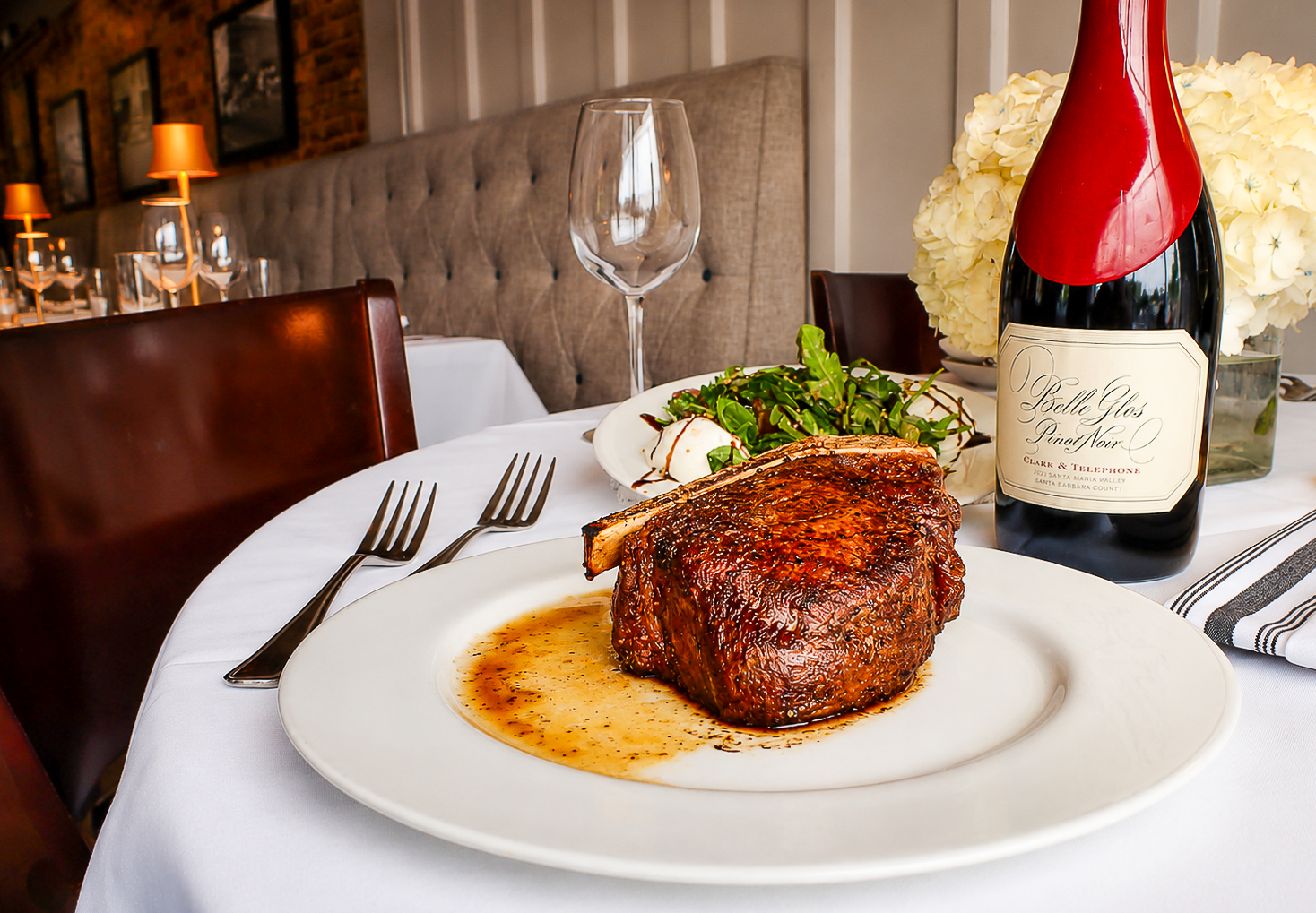
The caramel, vanilla, spice and oak found in many bourbons can pair beautifully with the rich flavor and char of a well prepared steak.
A softer wheated bourbon might complement rather than compete with the meal. A higher rye bourbon can bring more spice. A deeper, oak forward bourbon can stand up nicely beside a richer cut of beef.
And sometimes the best pairing happens after dinner.
A good bourbon, a little dessert and nowhere you need to be for another hour is not a bad way to finish an evening on Marietta Square.
Find Your Next Bourbon at Mac’s Chophouse
You do not need to know everything about mash bills, proof or barrel aging to appreciate bourbon.
Sometimes you simply know when you have found one you like.
That is part of the fun.
Start with something familiar. Try something you have never ordered before. Compare two different styles. Ask about a bourbon that catches your attention behind the bar.
Mac’s Chophouse combines an extensive bourbon selection with prime steaks, sustainable seafood, craft cocktails and the atmosphere of a classic American steakhouse on the historic Marietta Square.
So the next time you join us for dinner, take another look at the bourbon selection.
You might come for the steak and leave having found a new favorite whiskey.
Restoring History, One Plate at a Time: Renovating a Civil War-Era Space into a Culinary Destination